Caritas St. Hedwig Housing

Decarbonizing affordable social housing
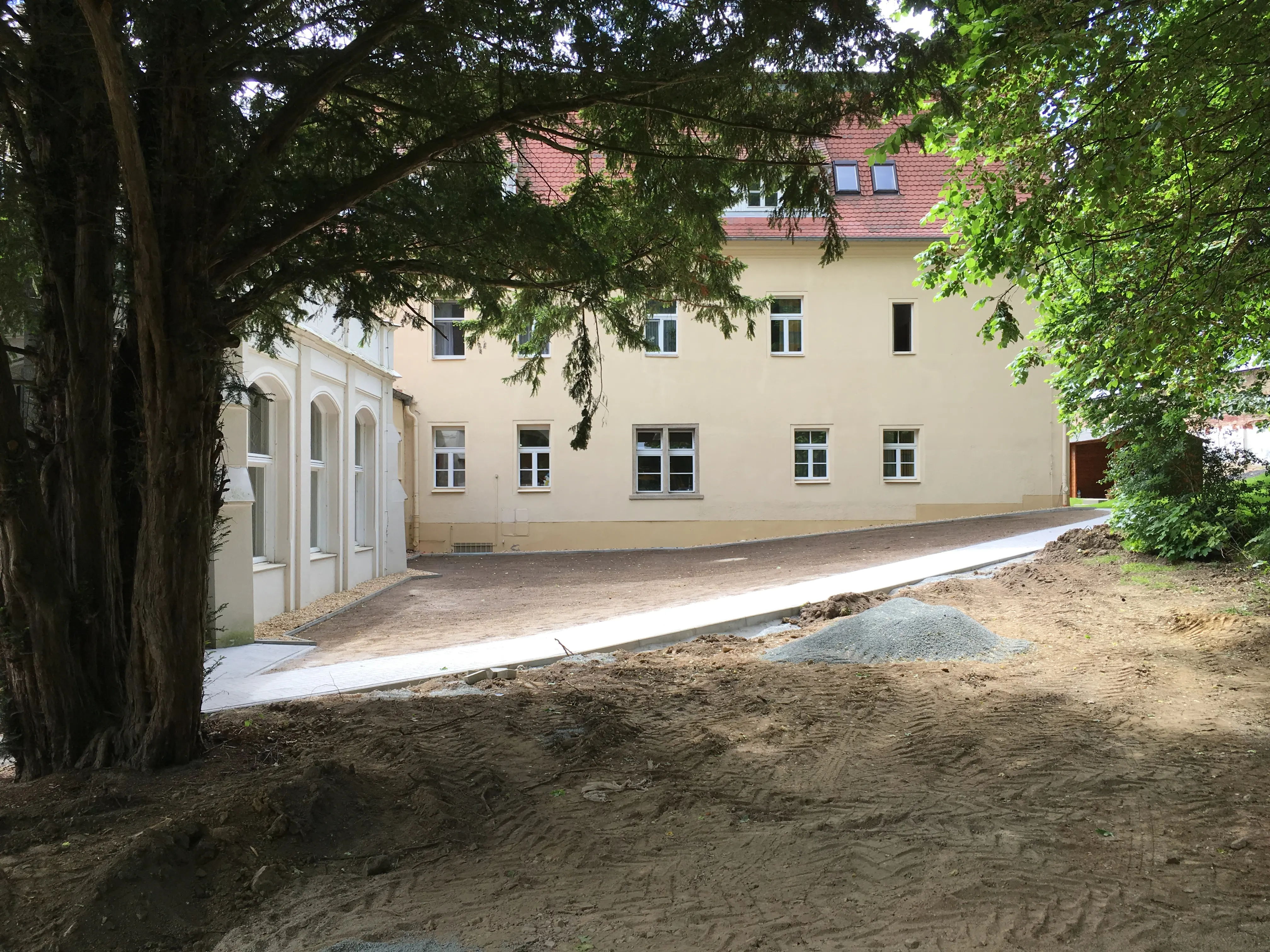
Reichenbach, Germany
| Copyright Caritasverband der Diözese Görlitz

The Challenge

The Challenge

Caritas St. Hedwig provides long-term housing and care for people with mental health challenges. As a listed historic building, deep renovation of the building envelope is limited, making the decarbonization of heat supply the primary challenge. At the same time, any intervention had to maintain affordability and ensure that housing and energy costs would not increase for residents.

Building Profile

Building Profile

Building type

Residential (multi)

Building owner

Caritas Association of the Diocese of Görlitz

Engineering consultant

Ingenieurbüro Elisabeth Eckstädt

Construction Year

18th century

Floor Area

1840 m²

Program

Supported housing, residential care, communal living spaces, staff and support facilities.

Phases

Conception (2025) / Realization (2026-tbd)

Building type

Residential (multi)

Building owner

Caritas Association of the Diocese of Görlitz

Engineering consultant

Ingenieurbüro Elisabeth Eckstädt

Construction Year

18th century

Floor Area

1840 m²

Program

Supported housing, residential care, communal living spaces, staff and support facilities.

Phases

Conception (2025) / Realization (2026-tbd)

Project Impact

Project Impact

3,837tCO2e
Carbon savings (lifetime)
1.4yrs
Ecological breakeven
852K CHF
Cost savings (lifetime)
7.8yrs
Economic breakeven
95CHF / tCO2e
Carbon mitigation costs

Why this building

The project demonstrates how ambitious climate action can be combined with social responsibility. Caritas St. Hedwig serves vulnerable residents who depend on affordable housing and care services. The project therefore provides an important example of how nonprofit residential care facilities can reduce emissions while protecting affordability and maintaining quality of life.

Frictions encountered

  • Listed-building status limits conventional retrofit options.

  • Decarbonization measures must not increase housing costs for residents.

  • Heat supply must remain reliable for a residential care environment.

  • Multiple renewable energy technologies need to be integrated into a coherent system.

  • Climate, social, and economic objectives must be achieved simultaneously.

Measures planned/ implemented

  • District heating network.

  • Island-capable local power grid.

  • Rooftop photovoltaic system.

  • Battery storage.

  • Renewable-powered co-generation unit.

  • Heat pump.

  • Intelligent renewable energy management.

Co-benefits

The project combines climate protection with social responsibility by reducing emissions without increasing housing costs for residents. Improved energy independence, reliable heat supply, and long-term financial stability strengthen the facility's ability to support vulnerable people well into the future.

| Copyright Caritas Association of the Diocese of Görlitz
„The Belimo Climate Foundation’s expertise was instrumental in shaping a decarbonization strategy for our building—keeping it affordable for residents and ensuring a socially responsible implementation through BCF co‑financing.“
Matthias Schmidt, Board Member, Caritas Association of the Diocese of Görlitz
| Copyright Caritas Association of the Diocese of Görlitz
„The Belimo Climate Foundation’s expertise was instrumental in shaping a decarbonization strategy for our building—keeping it affordable for residents and ensuring a socially responsible implementation through BCF co‑financing.“
Matthias Schmidt, Board Member, Caritas Association of the Diocese of Görlitz