WWF Switzerland
Decarbonizing a modernist, Bauhaus-style office building
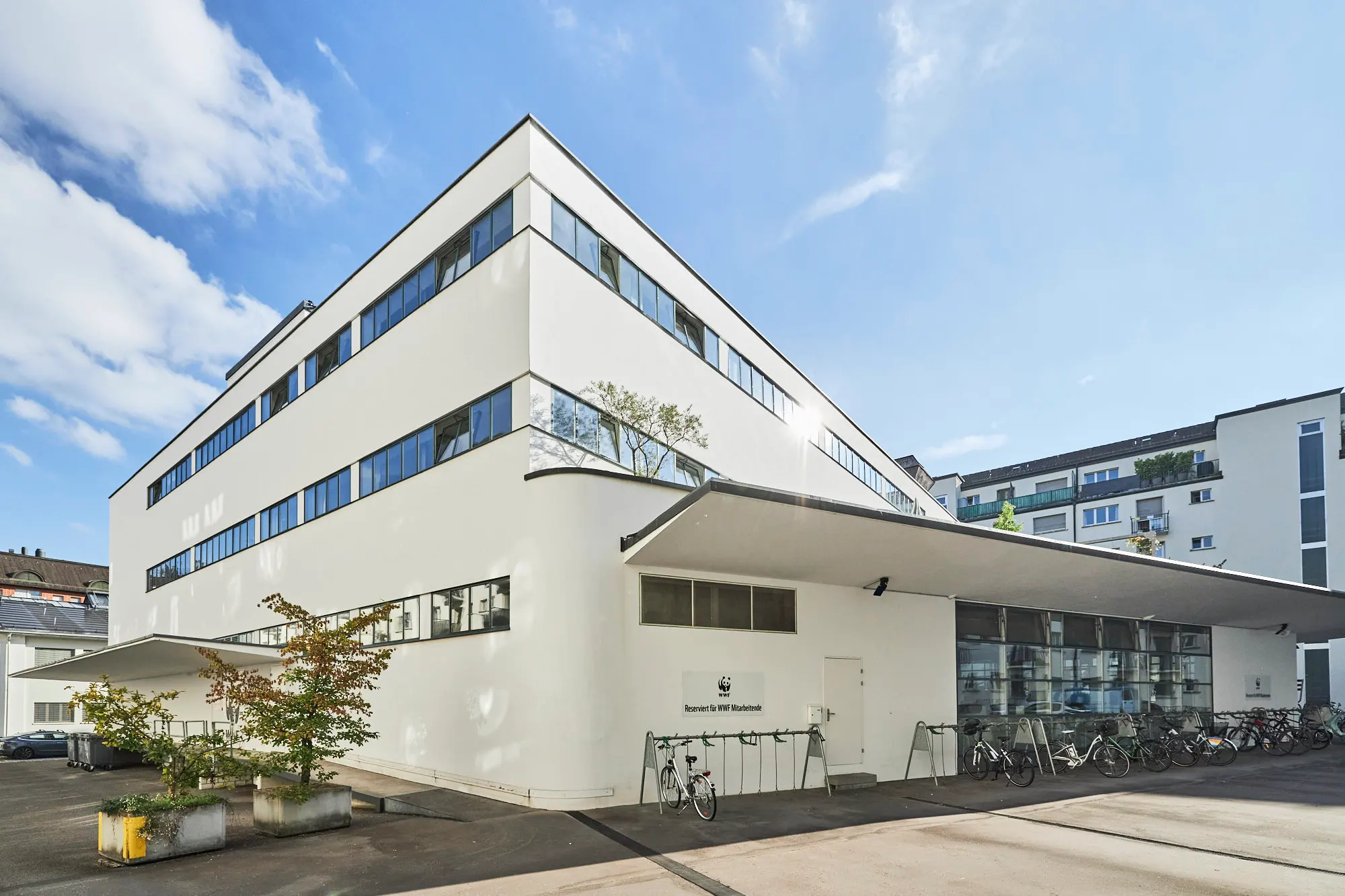
WWF Switzerland's Bauhaus-style headquarters required a major renovation to address ageing building components, improve energy performance, and enhance occupant comfort. Rising summer temperatures had become a particular challenge, while the building's ventilation, insulation, and overall energy systems no longer met current sustainability expectations. The project sought to combine architectural preservation with a deep energy retrofit and future-ready building solutions.
Why this building
As the headquarters of WWF Switzerland, the project demonstrates how an existing office building can be transformed to align with ambitious climate goals while continuing to serve its users. The building offers strong replication potential because many commercial and institutional buildings across Europe face similar challenges related to ageing infrastructure, energy inefficiency, and overheating risks. The project also serves as an example of how historic buildings can be modernized without compromising their architectural character. Supported by its visibility and mission-driven owner, it provides valuable lessons for the wider building sector. Based on project objectives and documented project scope
Frictions encountered
Balancing ambitious decarbonization goals with the constraints of an existing historic building.
Addressing increasing summer overheating while maintaining occupant comfort.
Replacing ageing building elements, including the roof, while minimizing disruption.
Integrating multiple retrofit measures, including ventilation upgrades, photovoltaics, greening, and water retention, into one coordinated renovation project.
Achieving net-zero ambitions despite dependencies on external energy supply systems such as district heating
Measures planned/ implemented
Operational energy optimization
Ventilation renewal with heat recovery
Roof renovation
Photovoltaic installation
Building greening
Rainwater retention measures
Co-benefits
The project improves indoor comfort, particularly during increasingly hot summer periods, while enhancing air quality and energy efficiency. Additional measures such as greening and rainwater retention strengthen climate resilience. As WWF's headquarters, the building also demonstrates how existing office buildings can successfully transition towards net-zero performance.
